

New Year's Day
- Date
- Day
- Thursday
- Substitute day
- No
WhatNextHoliday.com
Public holidays in Peru in 2026
Compatible with Apple Calendar, Google Calendar, Outlook, and mobile devices.
| All public holidays | Date | Day | Substitute day |
|---|---|---|---|
| New Year's Day | Thursday | No | |
| Maundy Thursday | Thursday | No | |
| Good Friday | Friday | No | |
| Easter Sunday | Sunday | No | |
| Labour Day | Friday | No | |
| Saints Peter and Paul | Monday | No | |
| Independence Day | Tuesday | No | |
| Independence Day | Wednesday | No | |
| Santa Rosa de Lima | Sunday | No | |
| Battle of Angamos | Thursday | No | |
| All Saints' Day | Sunday | No | |
| Immaculate Conception | Tuesday | No | |
| Christmas Day | Friday | No |
Maximize your time off in 2026 by taking strategic leave days around public holidays to create long weekends and extended breaks.
Jan 1 - Jan 4
Mar 28 - Apr 5
Apr 2 - Apr 5
Apr 25 - May 3
May 1 - May 3
Jun 27 - Jun 29
Jun 27 - Jul 5
Jul 25 - Jul 29
Oct 8 - Oct 11
Dec 5 - Dec 8
Dec 19 - Dec 27
Dec 25 - Dec 27
Calculate exact business days and working hours between two dates, excluding weekends and official public holidays.
Not public holidays - normal working days unless your employer or school says otherwise. They are not treated as days off when we count working days, long weekends or bridge days. Cultural and religious observances
| Date | Name | Tradition |
|---|---|---|
| Nov 1, 2026 - Nov 2, 2026 | Day of the Dead | Mexican culture |
Peru has sixteen nationwide public holidays. The calendar combines Catholic observances, the Independence celebrations and commemorations of important events and figures in Peruvian history.[1][2] For private-sector workers, paid public-holiday rest and compensation for holiday work are principally governed by the legislation on remunerated rest, while the Government may separately declare compensable non-working days that should not be confused with statutory holidays.[1][3]
Peru's nationwide calendar contains sixteen public holidays. They include New Year's Day, Holy Thursday, Good Friday, Labour Day, the Battle of Arica and Flag Day, Saints Peter and Paul, Peruvian Air Force Day, the two Independence celebrations known collectively as Fiestas Patrias, the Battle of Junín, Saint Rose of Lima, the Battle of Angamos, All Saints' Day, the Immaculate Conception, the Battle of Ayacucho and Christmas.[1][2]
The current total is higher than the original framework established by the legislation on remunerated rest. Four additional national holidays were subsequently added by separate laws: commemorations of the Battle of Ayacucho, the Battle of Junín, the Battle of Arica and Flag Day, and Peruvian Air Force Day.[2] These additions are important for anyone using an older Peruvian holiday list, because such a list may omit legally recognised nationwide holidays.
Workers covered by Peru's private-sector remunerated-rest legislation are entitled to paid rest on statutory public holidays. The remuneration for the holiday is generally equivalent to an ordinary working day's pay, subject to the detailed rules in the legislation.[1]
If an employee works on a public holiday without receiving substitute rest, the law requires payment for the work performed plus a surcharge equal to the remuneration for that work.[1] SUNAFIL describes this as a full additional premium and notes that sectors such as health care, hospitality, transport, tourism, security, utilities, pharmacies and supermarkets may continue operating during holidays.[4] This means a public holiday is not a legal guarantee that every workplace or commercial establishment will close.
A recurring source of confusion in Peru is the distinction between a statutory public holiday, or feriado, and a government-declared día no laborable. They are not interchangeable. A statutory holiday carries the paid-rest rights established by labour legislation, while a compensable non-working day declared for public-sector employees generally requires the hours not worked to be recovered later.[1][3]
The Government periodically uses compensable non-working days to create longer breaks and encourage domestic tourism. Such measures are adopted for particular periods and should not be presented as permanent additions to Peru's holiday calendar.[3] Private-sector workplaces may sometimes participate under conditions established by the relevant decree and agreement between employer and workers.[3] For annual planning, check the current government announcements separately from the permanent list of public holidays.
Fiestas Patrias is unusual in providing two consecutive statutory holidays associated with Peru's national independence celebrations.[1] The broader holiday calendar also contains several military and independence-era commemorations, including the Battle of Arica and Flag Day, Peruvian Air Force Day, the Battle of Junín, the Battle of Angamos and the Battle of Ayacucho.[2]
Several of these historical holidays are relatively recent additions to the national calendar. Official records show that the Battle of Ayacucho, Battle of Junín, Battle of Arica and Flag Day, and Peruvian Air Force commemorations were added through separate legislation after the original remunerated-rest framework had established the earlier holiday list.[2] Their inclusion explains why older sources that describe Peru as having twelve national holidays are now outdated.
Catholic tradition remains prominent in Peru's statutory calendar. Holy Thursday and Good Friday form the Easter observance, while Saints Peter and Paul, Saint Rose of Lima, All Saints' Day, the Immaculate Conception and Christmas are also national public holidays.[1][2] Holy Week dates move with the ecclesiastical calendar, so their Gregorian dates must be checked for the relevant year.
Peru's rules distinguish public-holiday rest from ordinary weekly rest. The treatment of particular holidays and working arrangements should be determined under the applicable remunerated-rest legislation rather than reduced to a universal weekend rule.[1]
The legislation also contains rules concerning when particular holidays are observed, while subsequent laws have added holidays to the national calendar.[1][2] Employers and employees dealing with rotating schedules, substitute rest or work actually performed on a holiday should therefore use the current legal framework and official labour guidance.
Holiday periods can increase domestic travel, which is one reason the Government has used compensable non-working days to encourage tourism and create extended breaks.[3] Travellers should allow additional flexibility around major national celebrations and long weekends, particularly when their plans depend on interprovincial transport, government services or attractions with controlled visitor capacity.
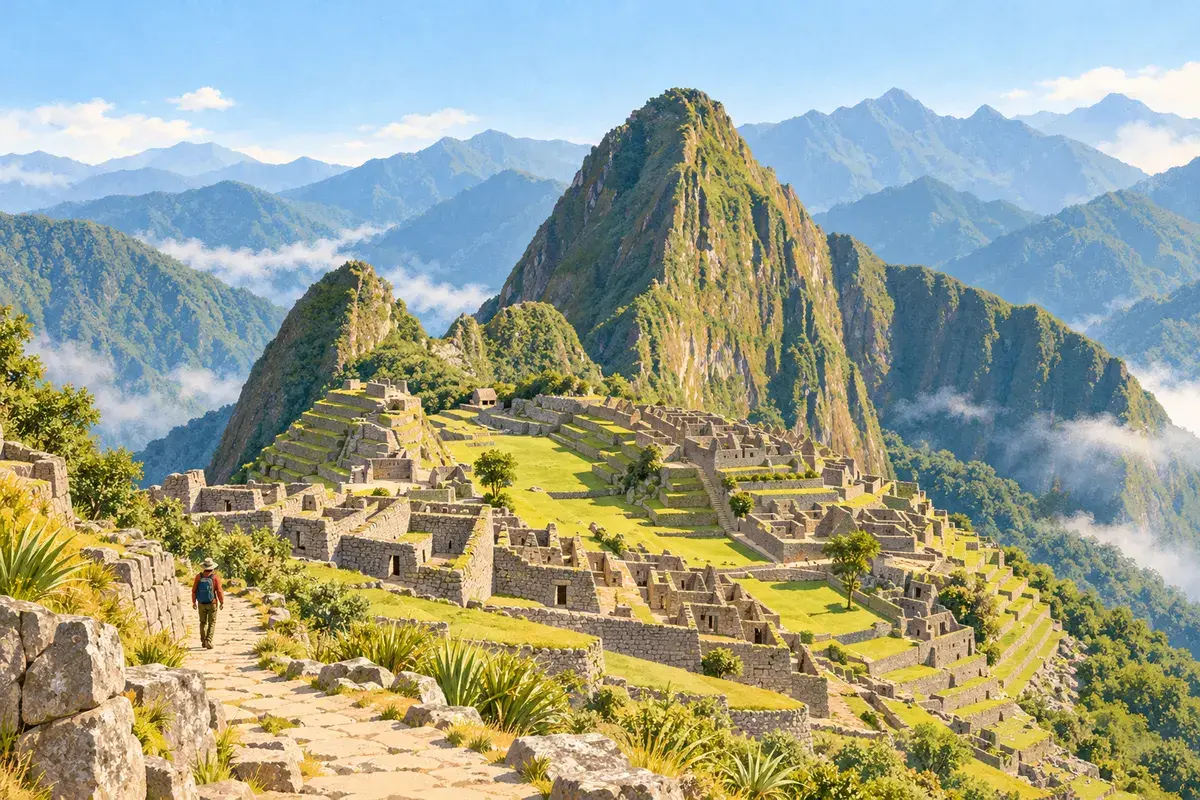
For Machu Picchu, visitors should use the Ministry of Culture's official ticketing arrangements rather than assume that ordinary holiday opening patterns apply. The Ministry regulates visitor capacity and sells admission through its authorised ticketing system.[5] More generally, opening hours for museums, archaeological sites, restaurants, banks and private businesses should be verified with the relevant operator because a national holiday does not imply one uniform closure rule for every service.
Peru has sixteen nationwide public holidays under the current legal framework.[2] Four additional national holidays were subsequently created by law.
A statutory public holiday is a legally established paid day of rest governed by the applicable labour rules.[1] A día no laborable declared by the Government can instead be a temporary, compensable non-working day, particularly for public-sector employees, with the missed working hours recovered later.[3]
No. SUNAFIL specifically notes that activities such as supermarkets, pharmacies, clinics, restaurants, hotels, transport, tourism, security and essential utilities may continue operating on public holidays.[4] Visitors should check the actual opening hours of any service they need.
They should be checked carefully. Peru's national calendar expanded after the original remunerated-rest legislation was enacted, with four additional historical commemorations added through later laws.[2] A current official calendar is therefore preferable for planning.