

New Year's Day
- Date
- Day
- Thursday
- Substitute day
- No
WhatNextHoliday.com
Public holidays in Svalbard & Jan Mayen in 2026
Compatible with Apple Calendar, Google Calendar, Outlook, and mobile devices.
| All public holidays | Date | Day | Substitute day |
|---|---|---|---|
| New Year's Day | Thursday | No | |
| Maundy Thursday | Thursday | No | |
| Good Friday | Friday | No | |
| Easter Sunday | Sunday | No | |
| Easter Monday | Monday | No | |
| Labour Day | Friday | No | |
| Ascension Day | Thursday | No | |
| Constitution Day | Sunday | No | |
| Pentecost | Sunday | No | |
| Whit Monday | Monday | No | |
| Christmas Day | Friday | No | |
| Boxing Day | Saturday | No |
Maximize your time off in 2026 by taking strategic leave days around public holidays to create long weekends and extended breaks.
Jan 1 - Jan 4
Mar 28 - Apr 6
Apr 2 - Apr 6
Apr 25 - May 3
May 1 - May 3
May 14 - May 17
May 23 - May 25
May 23 - May 31
Dec 19 - Dec 27
Dec 25 - Dec 27
Calculate exact business days and working hours between two dates, excluding weekends and official public holidays.
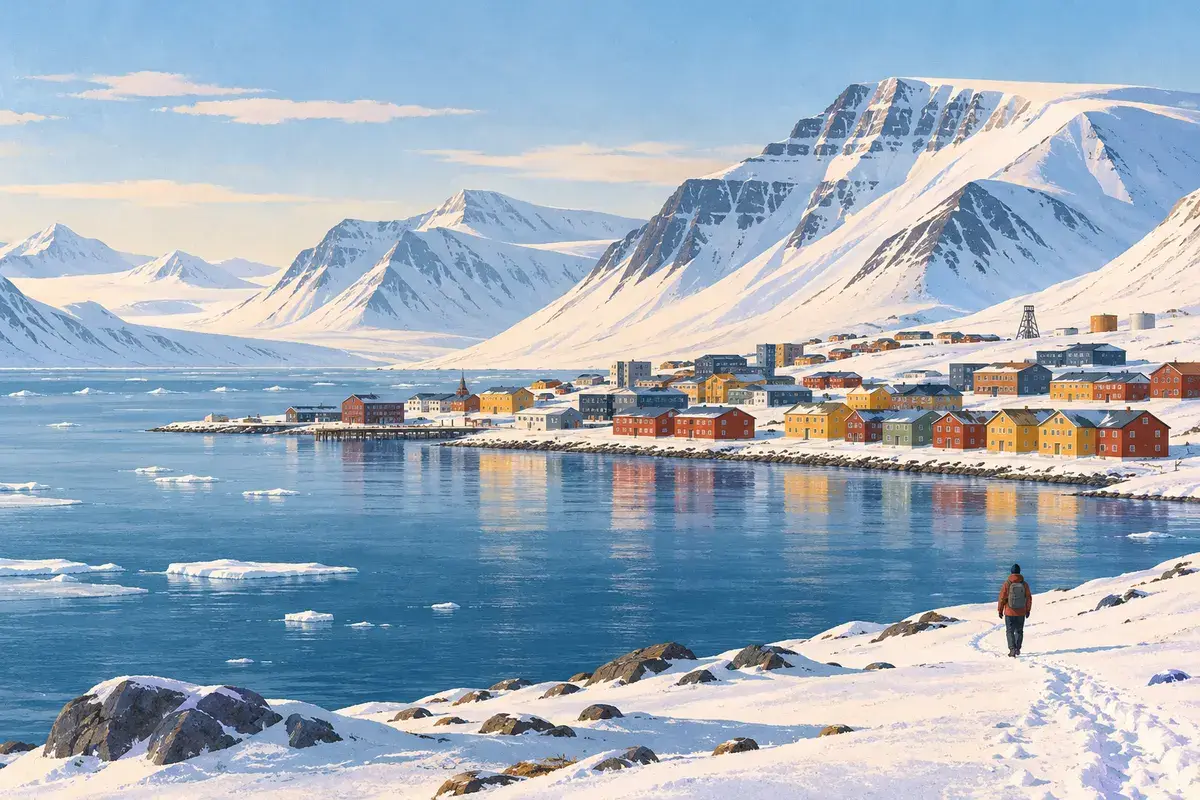
Svalbard and Jan Mayen are both parts of the Kingdom of Norway, but treating them as one ordinary Norwegian holiday jurisdiction is misleading. Svalbard has a permanent civilian community and locally adapted legislation, while Jan Mayen is a remote state-operated station with only a small rotating workforce. Norwegian holidays are visible in both places, but the legal and practical consequences must be considered separately. [1][2]
Svalbard and Jan Mayen share the same ISO country-code grouping, but they are legally distinct territories. The Svalbard Act states that Svalbard forms part of the Kingdom of Norway, while the separate Jan Mayen Act gives Jan Mayen the same constitutional status. In both territories, Norwegian private law, criminal law and procedural law apply as a starting point, while other legislation generally requires a specific basis for application. [1]
This matters for holiday information because it is too broad to say that every mainland Norwegian labour or public-holiday rule automatically applies unchanged in both territories. Svalbard has a substantial civilian economy centred on Longyearbyen, whereas Jan Mayen is administered around a very small state workforce and has no comparable civilian commercial community. [1][2]
In practical life, Svalbard follows the familiar Norwegian cycle of Christian holidays and national observances. Easter includes Maundy Thursday, Good Friday, Easter Sunday and Easter Monday; Ascension and Pentecost provide additional movable holidays; Christmas includes Christmas Day and the following holiday. Labour Day and Norway's Constitution Day are also major observances. Svalbard-specific regulations themselves refer to Sundays and public holidays as well as Labour Day and Constitution Day when setting restrictions on activities such as alcohol sales. [3]
Norway's Constitution Day is a major community celebration in Longyearbyen rather than merely an administrative day off. Longyearbyen Local Council's programme shows the familiar Norwegian traditions adapted to the Arctic settlement: flag raising, speeches, wreath laying, a church service, a children's parade, family activities, music and a community celebration. [4]
The occasion illustrates how Norwegian national traditions have become part of local life in Svalbard. The celebrations involve local institutions and residents and can affect ordinary opening arrangements for municipal facilities and other services. [4]
Svalbard should not be described as simply mirroring every mainland employment rule. Under the Svalbard Act, Norwegian worker-protection legislation is among the categories given application to Svalbard, subject to adaptations for local conditions. [1] The Norwegian Holidays Act has also been expressly extended to Svalbard by regulation. [5]
The Holidays Act concerns annual holiday entitlement and holiday pay rather than serving as a complete list of public holidays. Working time, pay for work on holidays and other employment conditions can additionally depend on applicable legislation, collective agreements and employment contracts. Norway's general labour guidance likewise notes that working hours and related conditions can be regulated through several of these sources. [6]
A public holiday does not mean that every business in Longyearbyen closes. Local services can set their own holiday arrangements, while tourism, hospitality and essential infrastructure may continue operating. Municipal facilities provide a useful example: Longyearbyen Local Council publishes special opening information around public holidays, with some facilities closing while others may retain normal access. [7]
Svalbard also has locally specific commercial rules. Its alcohol regulations prohibit retail alcohol sales on Sundays and public holidays, as well as on Labour Day, Constitution Day and Christmas Eve. [3] Visitors should therefore check the particular shop, restaurant, attraction or service they intend to use instead of assuming either universal closure or ordinary hours.
Jan Mayen is fundamentally different from Svalbard for holiday planning. The Norwegian Armed Forces operate the station and describe a very small workforce responsible for maintaining Norway's presence, sovereignty and station operations, supplemented by personnel from the Norwegian Meteorological Institute. [2]
There is consequently no Longyearbyen-style civilian holiday economy to plan around. Public holidays primarily concern the schedules and employment arrangements of personnel stationed on the island rather than opening hours for shops, hotels or tourist attractions. Norwegian government material also notes that employment and annual-leave arrangements for Jan Mayen personnel can be governed through rules applying to state employees and collective agreements rather than by assuming that every mainland labour statute automatically extends to the island. [8]
Jan Mayen should not be approached as an alternative tourist destination with a public holiday timetable. Its small station-based population and state-operated infrastructure make ordinary consumer questions about holiday shopping, accommodation and attractions largely irrelevant. [2] The two territories therefore belong in the same geographic data entry but require very different practical guidance.
Yes, Norwegian national and Christian holiday observances form part of everyday life in Svalbard, including Labour Day, Constitution Day, Easter, Ascension, Pentecost and Christmas. Svalbard-specific regulations explicitly recognise Sundays, public holidays and major Norwegian civic holidays in their operating rules. [3][4]
Yes. Longyearbyen holds an extensive community celebration with traditions including flag raising, speeches, a children's parade, music, family activities and other ceremonial events. [4]
No. Opening arrangements vary by business and service. Municipal facilities can publish special holiday hours, while tourism and hospitality businesses may continue operating. Some activities are subject to specific rules, such as the prohibition on retail alcohol sales on Sundays, public holidays and certain other observance days. [3][7]
Jan Mayen does not have a conventional civilian tourism and retail economy comparable with Longyearbyen. The island's small population consists primarily of personnel operating the Norwegian station and meteorological services, so holiday effects principally concern internal staffing and station routines rather than tourist businesses. [2][8]