

- Day
- Thursday
- Substitute day
- No
Ashura in Iraq
Ashura is listed as a public holiday in Iraq. Use the dates below to plan ahead and check whether an observed or substitute day applies.
Ashura dates
5Ashura in Iraq
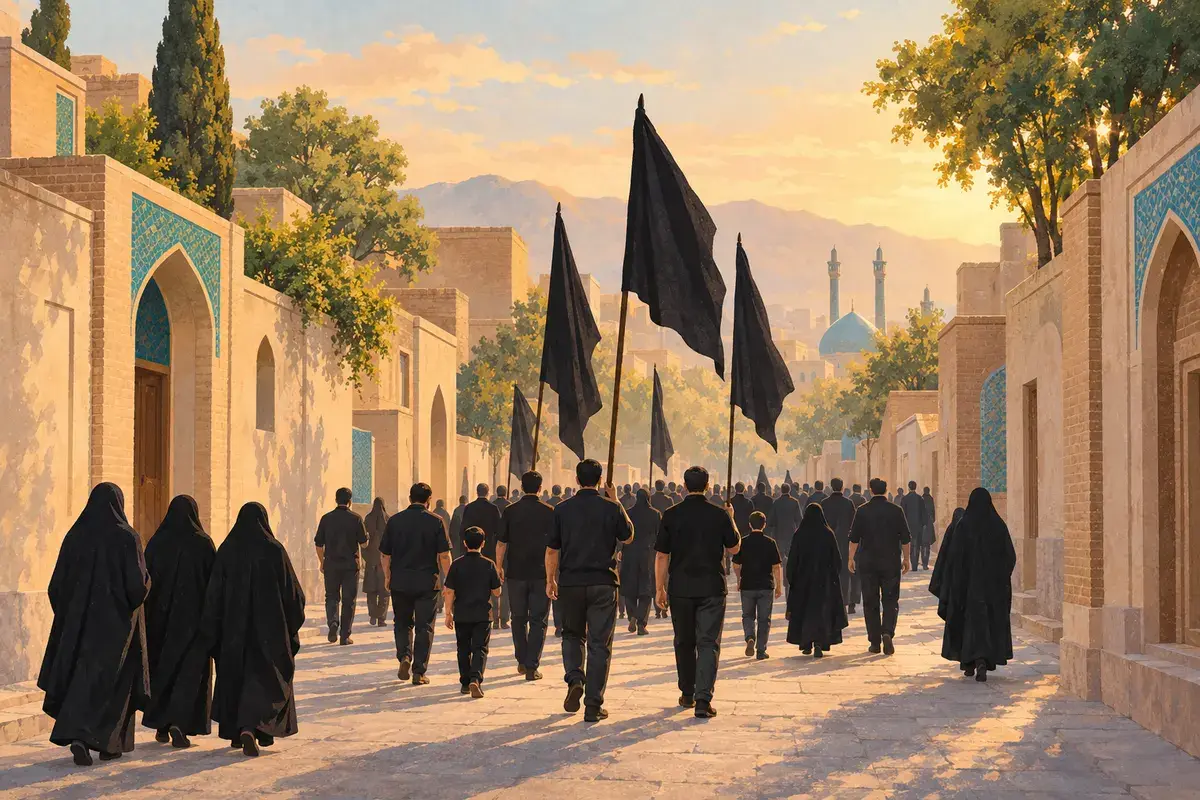
Ashura is the 10th day of the Muharram and is listed among the official holidays on the Central Bank of Iraq's holiday page.[1] It is closely tied to Karbala, the Iraqi city where Imam Hussein was killed in 680, and it is a day of mourning for Shia Muslims.[2][3]
What the day marks
Ashura falls on the 10th of Muharram, the first month of the Islamic year. The TDV Encyclopedia of Islam records that Hussein was killed at Karbala on 10 Muharram 61 AH, which corresponds to 10 October 680.[2]
After Karbala, Shia Muslims made the day a day of mourning, with mourning rites that include self-flagellation in some communities.[2] Sunni Muslims have a different tradition around the same date: the encyclopedia notes that the Prophet Muhammad ordered fasting on Ashura before Ramadan fasting became obligatory, and that fasting on the day later became optional.[2]
Karbala and the Iraqi setting
Karbala lies about 100 km southwest of Baghdad. Hussein's tomb is there, which makes the city sacred to Shia Muslims, and the shrine complex has long drawn visitors.[3]
The same entry says that mourning rituals are held in Muharram, especially on the 10th day.[3] The sources I could open do not describe the size or programme of the gatherings in a given year, so this article does not give attendance figures.
How the date is set
Ashura follows the Hijri lunar calendar. That calendar has twelve months and a year of about 354 days, so the day moves earlier against the Gregorian calendar each year.[4]
The Central Bank of Iraq lists Ashura by date in its yearly holiday table, so check that table or an official announcement for the Gregorian day in a given year.[1]
Planning around the day
Ashura appears on the Central Bank's official holiday list.[1] The page does not describe closing hours, travel limits or any substitute day, so confirm opening times locally, especially near Karbala and in Baghdad.[1]
Frequently asked questions
Is Ashura an official holiday in Iraq?
Yes. The Central Bank of Iraq lists Ashura in its table of official holidays.[1]
What does Ashura commemorate?
It commemorates the killing of Hussein at Karbala on 10 Muharram 61 AH (10 October 680), as recorded by the TDV Encyclopedia of Islam.[2]
Why does the date change each year?
Ashura is set by the Hijri lunar calendar, which has a year of about 354 days, so it shifts against the Gregorian calendar.[4]
Where in Iraq is Ashura most closely associated?
Karbala, about 100 km southwest of Baghdad, where Hussein's tomb is located.[3]
Sources and references
Sources used for Ashura in Iraq:
- البنك المركزي العراقي | العطل الرسمية- Central Bank of Iraq
- Âşûrâ - TDV İslâm Ansiklopedisi- TDV Islamic Research Center (TDV Encyclopedia of Islam)
- Kerbelâ - TDV İslâm Ansiklopedisi- TDV Islamic Research Center (TDV Encyclopedia of Islam)
- Takvim - TDV İslâm Ansiklopedisi- TDV Islamic Research Center (TDV Encyclopedia of Islam)